
Liability vs Full Coverage — Hawaii
Free to compare
The Multi-Vehicle Coverage Decision
You own two or more vehicles in Hawaii and you're deciding whether to carry minimum liability on all of them or step up to full coverage on some or all. The question isn't just what the state requires — it's what each coverage tier actually protects when you're managing multiple cars on one policy, and how Hawaii's mandatory personal injury protection and 9.6% uninsured-motorist rate change the calculation.
Hawaii requires $40,000 bodily injury per person, $80,000 per accident, and $20,000 property damage, plus personal injury protection. That's the floor. Full coverage adds collision and comprehensive to repair or replace your own vehicles. When you're insuring multiple cars, the decision splits: you might carry full coverage on the newer vehicle and liability-only on the older one, or you might structure coverage identically across all vehicles to simplify the policy. This article walks the structural reality of each choice and how it applies to a multi-vehicle household.
“Liability-only leaves every vehicle on your policy unprotected for repair costs after an at-fault accident or a hit from an uninsured driver.”

Check Your Rate Against Other Hawaii Drivers
Get My Hawaii Car Insurance Quote9.6%
Hawaii Uninsured Motorists
Nearly one in ten drivers on Hawaii roads carries no insurance. When an uninsured driver hits your vehicle, liability coverage on your own policy does not pay for your damage — only collision coverage does.
Insurance Research Council, 2023
What Liability Actually Covers Across Multiple Vehicles
Liability insurance pays for damage you cause to someone else's property or person. It does not pay to repair your own vehicles. When you carry liability-only on a multi-vehicle policy, every car on that policy is covered for the damage you cause to others, but none of them are covered for their own repair costs after an at-fault accident.
Hawaii's mandatory personal injury protection covers your own medical expenses and lost wages regardless of fault, up to the PIP limit you select. That means liability-plus-PIP handles injury costs for you and your household, but property damage to your own vehicles still falls entirely on you when you're at fault. If another driver hits you and they carry liability, their property-damage coverage pays for your vehicle — but 9.6% of Hawaii drivers carry no insurance, and many more carry only the $20,000 minimum, which may not cover the full cost of repairing two damaged vehicles in a single accident.
The structural gap: liability protects others from you. It does not protect your household's vehicles from anyone else unless that other driver has insurance and is at fault. When you're managing two or more vehicles, an at-fault accident or an uninsured-motorist collision can disable multiple cars at once, and liability coverage pays for none of them.
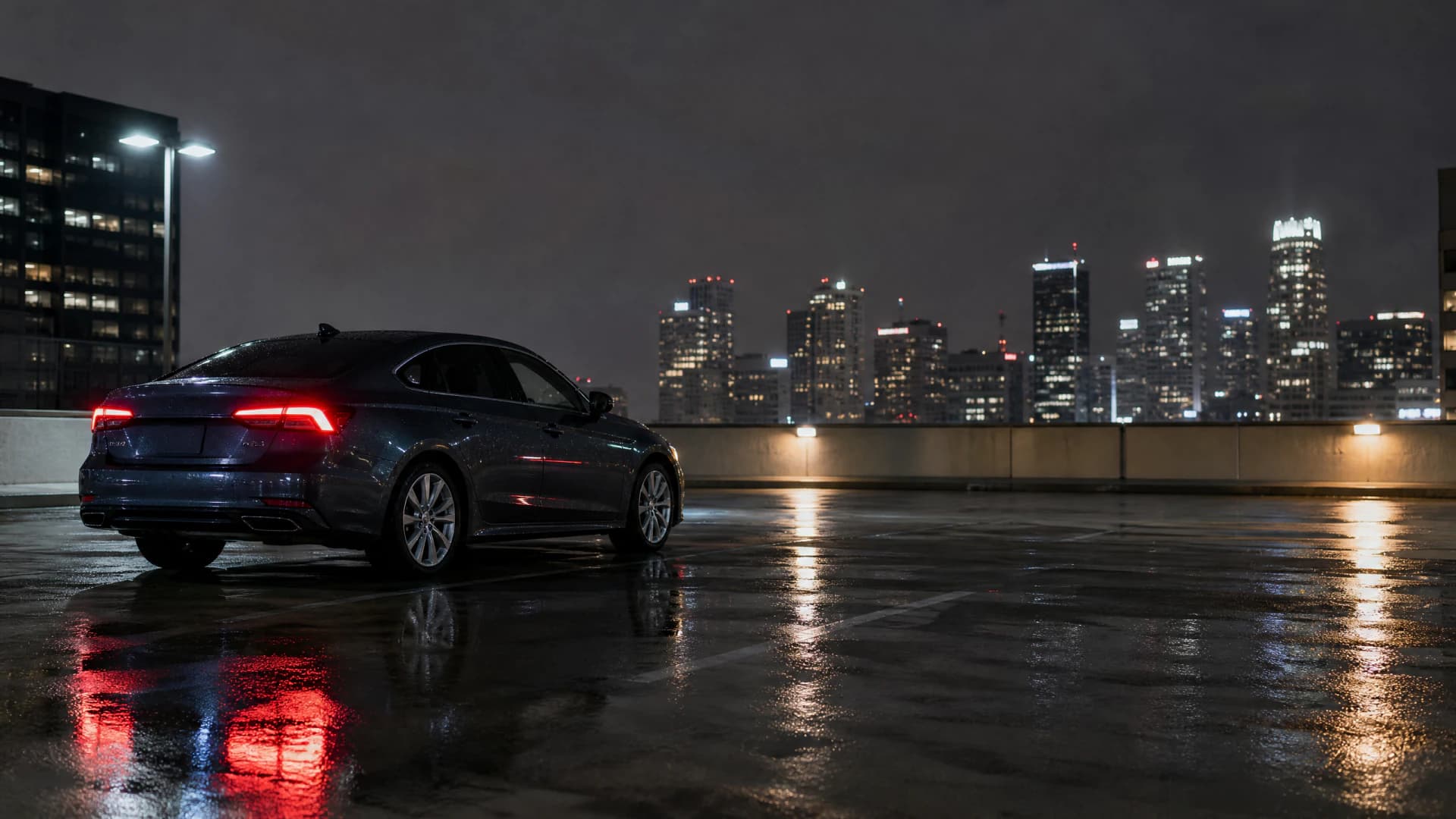
Liability-only leaves every vehicle on your policy unprotected for repair costs after an at-fault accident or a hit from an uninsured driver.



How the Decision Changes for Multiple Vehicles
A single-vehicle household can absorb the loss of one car more easily than a multi-vehicle household can absorb the loss of two. When you're at fault in an accident that damages two of your vehicles — rear-ending another car while towing a trailer, or sideswiping your own parked car in the driveway — liability pays nothing toward either vehicle. Collision pays for both, minus two deductibles.
The math shifts when vehicle values diverge. The reasoning: the older vehicle's replacement cost is low enough that paying out of pocket is manageable, and the annual cost of collision and comprehensive on that vehicle may approach or exceed its value over a few years. The newer vehicle's replacement cost is high enough that losing it without insurance creates a financial gap the household cannot close quickly.
Deductibles matter more on a multi-vehicle policy. A $500 deductible on one vehicle is a single out-of-pocket cost. Some households raise deductibles to $1,000 on each vehicle to lower premiums, accepting the higher per-incident cost in exchange for lower monthly payments. Others keep deductibles at $500 to minimize the immediate cash outlay after an accident. There is no universal right answer — the choice depends on your household's cash reserves and risk tolerance.
$40,000 / $80,000 / $20,000
Hawaii Minimum Liability Limits
Hawaii requires $40,000 bodily injury per person, $80,000 per accident, and $20,000 property damage. These are the lowest limits you can carry and remain legal, but they may not cover the full cost of a serious multi-vehicle accident.
Hawaii Revised Statutes 431:10C-301
When Liability-Only Makes Sense
Liability-only is the correct choice when the vehicle's value is low enough that replacing it out of pocket is manageable, and when the household has cash reserves to cover that replacement cost without financial strain. At that point, liability-only plus a savings account earmarked for vehicle replacement is often the better financial structure.
Liability-only also makes sense when the vehicle is rarely driven. A third car used only for occasional errands or as a backup when another vehicle is in the shop faces lower accident risk than a daily commuter. Some households carry full coverage on the two primary vehicles and liability-only on the backup, reducing total premium while keeping the most-used vehicles fully protected.
Compare Carriers That Write Multi-Vehicle Policies in Hawaii
Twelve carriers write auto insurance in Hawaii: Allstate, Amica, Auto Club Enterprises, Farmers, Geico, Hartford, Liberty Mutual, National General, Progressive, State Farm, Travelers, and USAA. Not all offer identical multi-vehicle discounts, and not all structure collision and comprehensive premiums the same way across multiple vehicles. Some carriers apply a larger discount when all vehicles carry identical coverage; others allow mixed coverage tiers without penalty.
Request quotes from at least three carriers, specifying the exact coverage tier you want on each vehicle. A quote for full coverage on all three vehicles will differ from a quote for full coverage on two and liability-only on the third. The difference in total premium tells you what collision and comprehensive cost on that third vehicle, which helps you decide whether the coverage is worth the price. Compare the total annual premium across carriers, not just the per-vehicle rate — some carriers offer a lower per-vehicle rate but a smaller multi-vehicle discount, resulting in a higher total.
What Full Coverage Adds to a Multi-Vehicle Policy
When you add collision to a multi-vehicle policy, every vehicle listed with collision coverage is protected for repair costs regardless of fault. If you're at fault, collision pays after your deductible. If an uninsured driver hits you, collision pays after your deductible — you're not waiting on a driver with no insurance to reimburse you. Collision does not require the other driver to be identified or insured; it pays based on the damage to your vehicle.
Comprehensive covers non-collision events: theft, vandalism, fire, flood, falling objects, and animal strikes. Hawaii's vehicle theft rate is 383.3 per 100,000 population, higher than many mainland states, and comprehensive is the only coverage that pays to replace a stolen vehicle. When you're insuring multiple vehicles, losing one to theft or weather can strand household members who depend on that car for work or school. Comprehensive closes that gap.
Get Your Free Quote
Get My Hawaii Car Insurance QuoteFrequently Asked Questions
Can I carry full coverage on one vehicle and liability-only on another on the same policy?
Yes. Multi-vehicle policies allow different coverage tiers on each vehicle. You select collision and comprehensive coverage separately for each car when you build the policy. Many households carry full coverage on newer vehicles and liability-only on older ones to balance protection and cost.
Does Hawaii require collision or comprehensive coverage?
No. Hawaii requires only liability and personal injury protection. Collision and comprehensive are optional. Lenders require both when you finance or lease a vehicle, but once the loan is paid off, you can drop them if you choose.
What happens if an uninsured driver hits my car and I only have liability coverage?
You pay for your own repairs. Liability coverage does not pay for damage to your vehicle. Collision coverage pays for damage caused by an uninsured driver, minus your deductible. Without collision, you must sue the uninsured driver to recover costs, which is often unsuccessful.
How do deductibles work when multiple vehicles are damaged in the same accident?
You pay one deductible per vehicle. If two of your vehicles are damaged in the same accident and both carry collision coverage with a $500 deductible, you pay $1,000 total before insurance pays. The deductible applies per vehicle, not per accident.
Is it cheaper to insure multiple vehicles with the same coverage tier?
Not always. Some carriers offer a small discount when all vehicles carry identical coverage, but the savings is usually smaller than the cost of adding collision and comprehensive to a low-value vehicle. Compare total premium for mixed coverage versus identical coverage to see which costs less for your household.