
Minimum Coverage vs Full Coverage — Hawaii
Free to compare
The Minimum Coverage Decision for Multi-Vehicle Households
You own two or more vehicles in Hawaii and you're deciding whether to carry the state's minimum liability limits on every car, or whether to add collision and comprehensive coverage to some or all of them. The question matters because Hawaii's minimum coverage structure includes mandatory Personal Injury Protection alongside the liability minimums, and the combined cost floor changes the math compared to states where minimum coverage means liability only.
This article clarifies what Hawaii's minimum coverage actually includes, what it does not cover, and how the decision changes when you're insuring multiple vehicles on one policy. The path forward depends on the value of each vehicle, how you use them, and whether the household can absorb the loss of a car without insurance proceeds.
“Hawaii's property damage minimum of $80,000 is higher than most states, but the bodily injury minimums can be exceeded quickly in a serious accident.”
Check Your Rate Against Other Hawaii Drivers
Get My Hawaii Car Insurance Quote9.6%
Hawaii Uninsured Motorist Rate
Nearly one in ten drivers on Hawaii roads carries no insurance. When an uninsured driver hits your vehicle, minimum liability coverage on your own policy pays nothing for your car's damage. Only collision coverage or uninsured-motorist property damage (if purchased separately) covers that loss.
Insurance Research Council, 2023
What Hawaii Minimum Coverage Actually Includes
Hawaii minimum coverage is $20,000 bodily injury per person, $40,000 bodily injury per accident, and $80,000 property damage liability. The state also mandates Personal Injury Protection, which covers your own medical expenses and lost wages regardless of fault. PIP is not optional: every Hawaii auto policy must carry it.
Minimum coverage does not include collision (damage to your own vehicle when you hit another car or object) or comprehensive (damage from theft, vandalism, weather, or animal strikes). It also does not include uninsured-motorist property damage, which covers your vehicle when an uninsured driver causes the collision. Those coverages are optional, and together they form what most drivers call full coverage.
When you insure multiple vehicles on one policy, you choose collision and comprehensive separately for each car. A household might carry full coverage on a financed 2022 sedan and minimum coverage on a paid-off 2008 truck used for errands. The multi-car discount applies to the entire policy regardless of which vehicles carry which coverages.

Hawaii's high uninsured-motorist rate means minimum coverage leaves you paying out of pocket when an uninsured driver totals your car.
When Full Coverage Is the Better Choice
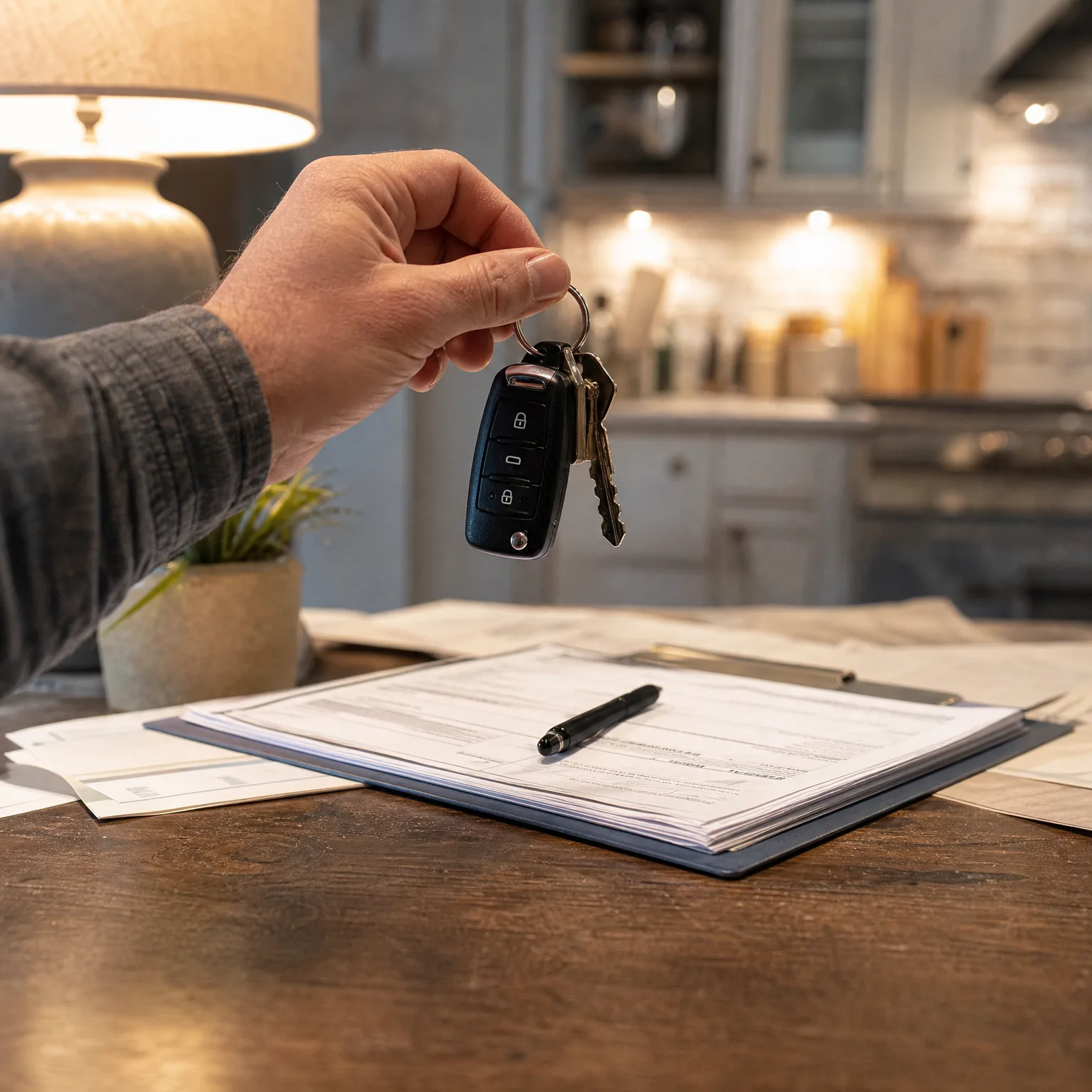
Full coverage makes sense when the vehicle's value justifies the premium, when you cannot afford to replace the car out of pocket, or when a lender requires it. Any financed or leased vehicle must carry collision and comprehensive: the lienholder mandates it to protect their interest. Even after the loan is paid off, if the vehicle is worth more than the household's emergency fund can cover, full coverage transfers that risk to the carrier.
For multi-vehicle households, the calculation runs separately for each car. A household with a financed 2023 SUV and a paid-off 2012 sedan might carry full coverage on the SUV and minimum coverage on the sedan. The multi-car discount lowers the combined premium for both vehicles, but the discount does not change the coverage decision for each individual car.
Hawaii's mandatory PIP requirement means you already pay for medical and lost-wage coverage on every policy. The incremental cost of adding collision and comprehensive is the only variable. Compare quotes with and without those coverages for each vehicle to see the actual dollar difference, then decide whether that difference is worth the protection for that specific car.
$20,000 / $40,000 / $80,000
Hawaii Minimum Liability Limits
Hawaii's property damage minimum of $80,000 is higher than most states, which reduces the risk of out-of-pocket liability exposure when you cause an accident. The bodily injury minimums of $20,000 per person and $40,000 per accident are lower, and a serious injury can exceed those limits quickly.
Hawaii Revised Statutes

How the Multi-Car Discount Changes the Equation
The multi-car discount lowers the per-vehicle premium when you insure two or more vehicles on the same policy. The discount applies to the total policy premium, not to each coverage separately, so adding collision and comprehensive to one vehicle while keeping another at minimum coverage still qualifies the entire policy for the discount. Carriers writing multi-vehicle policies in Hawaii include Geico, Progressive, State Farm, Allstate, Farmers, USAA, Liberty Mutual, National General, Travelers, Hartford, Amica, and Auto Club Enterprises. Each carrier's multi-car discount structure differs, so compare quotes across carriers to find the combination that fits your household's vehicle mix.
When one vehicle on the policy carries full coverage and another carries minimum coverage, the household pays less total premium than if each car were on a separate policy. The discount does not change whether full coverage is worth it for a given vehicle, but it does lower the cost of the decision either way.
Compare Carriers and Coverage Combinations
Request quotes from multiple carriers with the exact coverage combination you're considering: minimum coverage on Vehicle A, full coverage on Vehicle B, both on one policy. The quote will show the per-vehicle breakdown and the total policy premium with the multi-car discount applied. Run the same request with different coverage combinations to see how the premium changes when you add or drop collision and comprehensive on each car.
Hawaii's insurance market includes both national carriers and regional writers. Rates vary significantly by carrier for the same coverage, and the carrier offering the lowest rate for minimum coverage may not offer the lowest rate for full coverage. The only way to know is to compare quotes with your household's actual vehicle details, garaging address, and driver information. Use the site's comparison tool to request quotes from carriers writing multi-vehicle policies in Hawaii, and review the coverage options for each vehicle on your policy.
When Minimum Coverage Makes Sense for a Vehicle
Minimum coverage makes sense when the vehicle's actual cash value is low enough that the annual cost of collision and comprehensive exceeds the payout you would receive if the car were totaled. A conventional threshold: if the vehicle is worth less than ten times the annual cost of adding collision and comprehensive, consider dropping those coverages. Most households in that position choose minimum coverage and self-insure the vehicle's value.
Minimum coverage also fits vehicles driven rarely or parked most of the year. A classic car garaged nine months annually, a backup vehicle used only when the primary car is in the shop, or a work truck driven fewer than 2,000 miles per year all present lower collision risk. Comprehensive coverage still protects against theft and weather damage while parked, so some households keep comprehensive and drop collision on low-mileage vehicles. Hawaii's theft rate of 383.3 motor vehicle thefts per 100,000 population makes comprehensive worth evaluating even on rarely-driven cars.
Get Your Free Quote
Get My Hawaii Car Insurance QuoteFrequently Asked Questions
Does Hawaii require collision and comprehensive coverage?
No. Hawaii requires only liability coverage and Personal Injury Protection. Collision and comprehensive are optional unless a lender requires them. You choose those coverages separately for each vehicle on your policy.
Can I carry full coverage on one car and minimum coverage on another?
Yes. When you insure multiple vehicles on one policy, you select collision and comprehensive separately for each car. The multi-car discount applies to the entire policy regardless of which vehicles carry which coverages.
What happens if an uninsured driver hits my car in Hawaii?
If you carry only minimum liability coverage, you pay out of pocket for your vehicle's damage. Collision coverage or optional uninsured-motorist property damage coverage would pay for the repairs. Hawaii's uninsured-motorist rate is 9.6 percent.
How does the multi-car discount work with different coverage levels?
The multi-car discount applies to the total policy premium when you insure two or more vehicles on the same policy. It lowers the combined cost whether every vehicle carries the same coverage or each vehicle carries different coverage levels.
Is Personal Injury Protection the same as collision coverage?
No. Personal Injury Protection covers your medical expenses and lost wages regardless of fault. Collision coverage pays for damage to your vehicle when you hit another car or object. Hawaii requires PIP on every policy; collision is optional.